
Meetings Fail Before They Start
Consider a capture lead walking into a 30-minute pursuit meeting with a solicitation notice, a two-year-old CRM record, three competitor names, and a technical lead's forwarded email. Everyone has something useful, but no one knows which details are verified or which question needs an answer first. The meeting opens with a recap of the agency, then moves into a debate about scope, then ends with a vague request for more research. The team has spent time without making a pursuit decision.
This failure is expensive even when no proposal is written. Senior delivery, pricing, capture, and executive staff can lose hours to repeated reviews when the same background must be explained again. More importantly, a late realization that the requirement does not fit can consume scarce bid capacity that a stronger opportunity needed. A brief should prevent that waste by making the important unknowns visible before the meeting.
Government contracting adds a practical complication: information is spread across sources built for different purposes. A solicitation contains the buyer's stated need and instructions, while an agency forecast signals a possible future procurement and an award record documents a completed action. SAM.gov, USASpending, FPDS records, agency materials, and contractor research each answer different questions. A useful brief does not pretend one record tells the whole story.
Make the Brief Decision-Ready
An opportunity brief is not a miniature proposal and it is not a dumping ground for every available document. Its job is to help a group decide whether the opportunity merits attention, what must be validated, and who will do that work. That means the brief should lead with judgment, not background. If the most important conclusion is buried on page four, the document has missed its purpose.
The strongest briefs answer why this opportunity matters now. That may be a release date, a recompete approaching, a stated customer mission problem, a contract vehicle opening, or an internal capacity decision. It should not be a generic claim that an agency is important or the market is large. Timing gives the team a reason to act, defer, or decline.
Keep the document short enough that leaders can read it before the meeting, but complete enough that they do not need to reconstruct the situation from five systems. A one- to two-page working brief often does more than a long research packet because it forces priorities. Supporting links and source documents can sit behind the summary. The meeting should test the brief's conclusions rather than recreate its research.
Define the Customer Problem
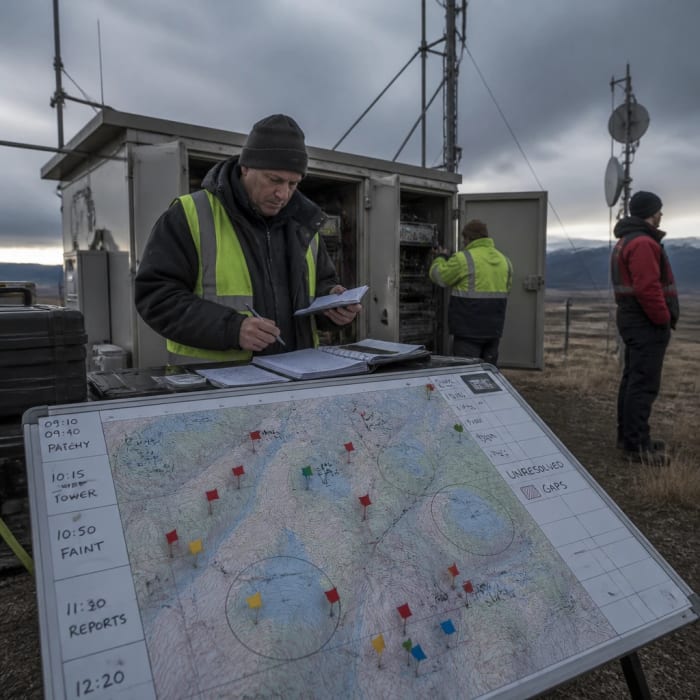
The brief should also identify the people or groups living with the problem. The contracting office may manage the procurement, but end users, program managers, technical owners, compliance staff, and mission leadership can experience the outcome differently. A team that treats the agency as one buyer will miss these differences. Naming affected groups helps your team test whether its past performance and approach address the actual pain.
- The current condition and its operational consequence
- The mission or business outcome the customer appears to want
- The user groups, program offices, and leaders affected
- The evidence supporting that view, with source links
Do not fill gaps with confident language. If the customer problem comes from an incumbent's public materials, a forecast description, or a conversation, label that source and its date. If it is an interpretation, say so. This discipline keeps a plausible story from becoming an unchallenged premise.
Show Urgency and Stakeholders
A useful brief explains why the customer may act now instead of simply documenting that an opportunity exists. Urgency can come from an expiring contract, a statutory deadline, a mission event, a funding cycle, a compliance change, or a visible performance issue. The evidence may be thin at the early forecast stage, and that is normal. The brief should distinguish a known trigger from a reasoned hypothesis.
Stakeholder mapping should focus on buying dynamics, not an exhaustive organization chart. Identify the office that owns the mission need, the likely acquisition organization, technical evaluators where known, and leadership whose priorities may shape the requirement. If an incumbent contractor is performing related work, record that as context rather than proof of future advantage. The goal is to understand who can define the problem, influence the acquisition, and judge results.
A pursuit meeting should spend its time challenging the story, not locating it.
Ask your team what evidence would show that urgency is real. A published acquisition plan, a current solicitation, a budget signal, or a validated customer conversation can strengthen the case. A stale CRM date or an undated web page cannot carry the same weight. This is especially important when a forecast may change before it becomes a solicitation.
Separate Facts From Assumptions

Outdated CRM fields are a common source of false certainty. A capture record can preserve an old incumbent name, projected date, or customer contact long after the market has changed. Each important fact should carry a source and a date, especially if it will influence a bid or no-bid decision. When no current source exists, mark the field as unverified rather than copying it forward.
A short open-questions list turns uncertainty into work. Include only questions that could change the recommendation, such as whether the buyer needs a prime contractor, whether a set-aside applies, whether the scope is new work or follow-on work, or whether a relevant contract vehicle is required. Avoid research tasks that merely add detail without changing a decision. The owner of each question should know what source or conversation could resolve it.
Test Fit and Alternatives
Fit is more than matching a keyword to a capability statement. The brief should explain why your team is credible to help with this specific customer problem, at this scale, under the likely buying path. Relevant experience, customer knowledge, qualified partners, available delivery capacity, and access to an appropriate vehicle may all matter. A generic list of company credentials gives leaders little basis for deciding whether to invest.
Competitive alternatives deserve the same clarity. The incumbent is one possibility, but the customer might extend existing work, use an internal team, consolidate the requirement, compete through a different vehicle, or split the work among several providers. A brief should identify known alternatives and clearly label likely ones as assumptions. This avoids the familiar mistake of treating an incumbent name as the entire competitive strategy.
Risks should be concrete enough to change behavior. For example, a missing required qualification, a weak past-performance match, a partner dependency, or limited time to validate scope deserves an owner and response plan. A vague note that competition will be tough does not. If the risk cannot be reduced before a decision point, leaders should see that plainly.
Name Outcomes and Measures

Workarounds are equally revealing. Customers often manage a problem with spreadsheets, manual approvals, email chains, fragmented tools, overtime, or temporary contractor support. Those workarounds can show where the cost and frustration sit, even when the solicitation language is broad. They can also reveal why a customer may resist change if the workaround is familiar or politically safe.
Keep outcome claims proportionate to the evidence. A team should not promise a percentage improvement before it understands the current baseline, constraints, and evaluation approach. Instead, identify the measure the customer may care about and the evidence needed to set a credible target. This gives technical and capture leaders a practical agenda for validation.
Close With Real Decisions
The final section of the brief should make the pursuit meeting's decisions explicit. A meeting can decide to proceed, pause pending validation, monitor a forecast, pursue through a partner, or decline. It can also decide that the opportunity is real but does not justify the current level of investment. Ambiguity at this point is how a weak opportunity becomes an accidental pursuit.
Record the recommendation, the confidence level behind it, and the evidence that would change it. For example, a team might proceed only if it confirms the acquisition path, identifies a qualified partner, or validates that its experience maps to the customer's stated outcome. That is more useful than assigning everyone to “learn more.” It creates a decision boundary that can be revisited as facts change.
- Decision: proceed, pause, monitor, partner, or decline
- Next validation: the one or two questions that matter most
- Owner and due date for each action
- Changing evidence: what would reverse the recommendation
Close with a dated record, not an implied consensus. Capture conditions can shift between forecast, solicitation, amendment, award, and performance, so the brief should show when its view was current. A dated recommendation protects the team from treating old analysis as current intelligence. It also makes the next review faster because the team can see what changed.
What to Do This Week
Choose one active opportunity that is likely to reach a pursuit meeting soon. Ask the capture lead to build a two-page brief using the sections above and to mark every material statement as verified, assumed, or unanswered. Remove background that does not affect a decision. Then circulate it before the meeting, not during it.
Use the meeting to test the customer problem, urgency, fit, alternatives, risks, and next evidence. If the team cannot state what would change its recommendation, it is not ready to approve significant pursuit effort. If the team cannot name an owner for each open question, the brief is still a research summary rather than an operating document. Repeat the practice until the format becomes the standard for every meaningful pursuit.
Three Sixty Vue's Contract Intelligence matches open solicitations to your capabilities, shows the information behind each score, creates briefs, and helps your team shortlist opportunities for review. Start this week by selecting one live opportunity and requiring a decision-ready brief before its next pursuit meeting.